
51±¬ÁÏ

Image
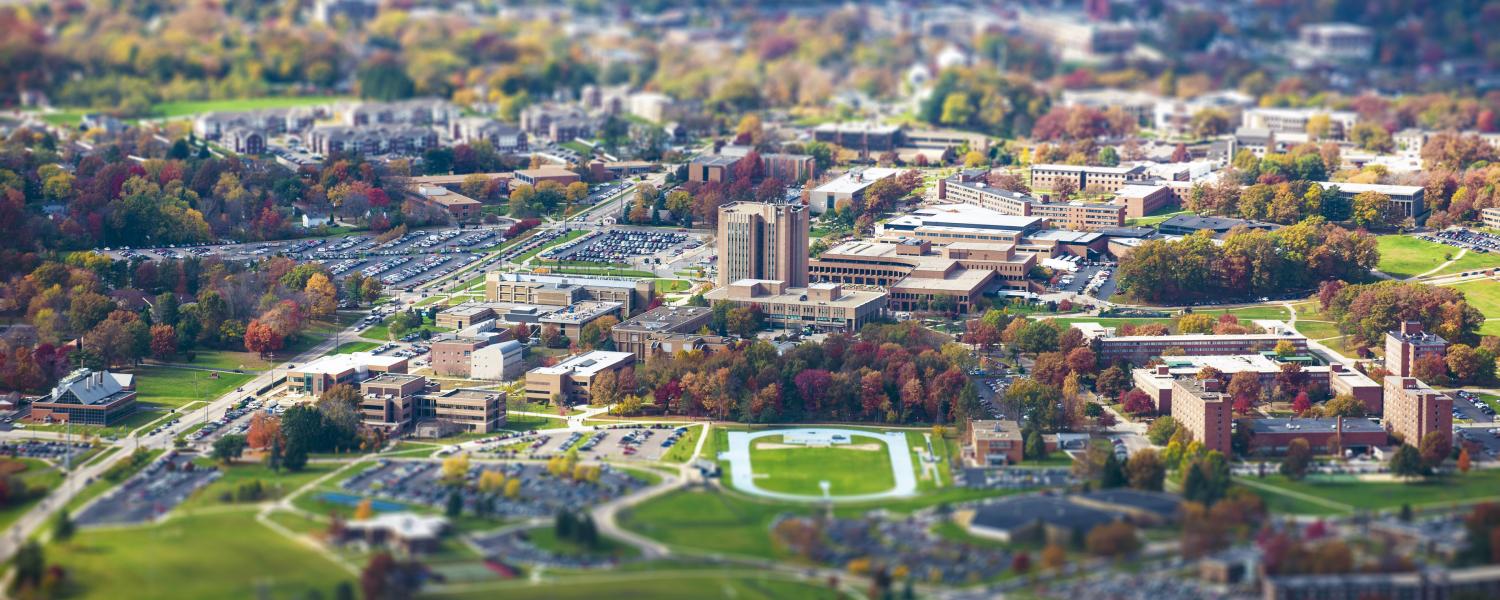
Aerial view of 51±¬ÁÏ’s main campus.

Geography - M.S.

Advance your understanding of the world through 51±¬ÁÏ’s Geography M.S., where you will explore the dynamic relationships between people, places and environments. With hands-on experience in research, geospatial technologies and fieldwork, you will build the skills to tackle real-world challenges and prepare for careers in academia, government or industry. Customize your path across areas like environmental, social or urban geography while developing expertise that makes a global impact.

Contact Us

Apply Now
Request Information
Schedule a Visit

Master’s Degree in Geography

The aim of 51±¬ÁÏ’s Master of Science Degree in Geography is to deepen students’ understanding of spatial processes, human-environment interactions, and advanced geographic methodologies. This program offers a rigorous curriculum that combines theoretical coursework with hands-on experience in geographic information systems, remote sensing, and field research. We strive to equip students with the analytical skills necessary to address pressing societal challenges, preparing them for careers in areas such as environmental consulting, urban planning, and academia, or for further doctoral studies in geography or related fields.

Program Information for Geography - M.S.

Program Description

Full Description

The Master of Science degree in Geography prepares graduate students for careers in both the academic field and non-academic jobs in various private and governmental agencies, such as urban/economic geography, social geography, physical/environmental geography and geographic information technology. Students learn geographic thought, research techniques and topical specialties while preparing to conduct original research.

Admissions for Geography - M.S.

For more information about graduate admissions, visit the graduate admission website. For more information on international admissions, visit the international admission website.

Admission Requirements

  • Bachelor's degree from an accredited college or university
  • Minimum 2.750 undergraduate GPA on a 4.000-point scale
  • Official transcript(s)
  • Résumé
  • Goal statement
  • Three letters of recommendation
  • English language proficiency - all international students must provide proof of English language proficiency (unless they meet specific exceptions to waive) by earning one of the following:1
    • Minimum 79 TOEFL iBT score
    • Minimum 6.5 IELTS score
    • Minimum 58 PTE score
    • Minimum 110 DET score
1

International applicants who do not meet the above test scores will not be considered for admission.

Application Deadlines

  • Fall Semester
    • Priority deadline: February 1

All application materials (including applicable fee, transcripts, recommendation letters, etc.) submitted by this deadline will receive the strongest consideration for admission.

Learning Outcomes

Program Learning Outcomes

Graduates of this program will be able to:

  1. Acquire advanced knowledge of the concepts, theories and technology in geography.
  2. Synthesize and present concepts and theories in geography.
  3. Demonstrate the ability to formulate research problems and carry out independent research projects.

Coursework

Program Requirements

Major Requirements

Major Requirements
GEOG 60800SEMINAR IN THE DEVELOPMENT OF GEOGRAPHIC THOUGHT 3
GEOG 69701RESEARCH AND PRESENTATION OF GEOGRAPHIC DATA 3
112
Major Electives, choose from the following: 26
GEOG 59070
GEOGRAPHIC INFORMATION SCIENCE
GEOG 59076
SPATIAL PROGRAMMING
GEOG 59080
ADVANCED GEOGRAPHIC INFORMATION SCIENCE
GEOG 59230
REMOTE SENSING
GEOG 69004
QUANTITATIVE METHODS IN GEOGRAPHY
Culminating Requirement
GEOG 60199THESIS I 36
Minimum Total Credit Hours:30
1

Maximum 3 credit hours of research (GEOG 60996 or GEOG 60998) may count toward the M.S. degree requirements. Other non-geography courses may be applied toward this requirement with approval.

2

Students who earned their bachelor's degree at 51±¬ÁÏ and have completed the undergraduate equivalents of any technique courses required in the master's degree can count them toward the technique courses requirement. Courses taken at the undergraduate level will not count toward the minimum total credit hour requirement for the master's degree; however, the additional technique courses will not be required.

3

Students must register for GEOG 60199 each semester and, if necessary, for GEOG 60299 thereafter, until all thesis requirements have been met. Credit hours for GEOG 60299 do not count toward the degree.

Graduation Requirements

Minimum Major GPA Minimum Overall GPA
- 3.000
  • No more than one-half of a graduate student’s coursework may be taken in 50000-level courses.
  • Grades below C are not counted toward completion of requirements for the degree.
Roadmap

Roadmap

This roadmap is a recommended semester-by-semester plan of study for this program. Students will work with their advisor to develop a sequence based on their academic goals and history. Courses designated as critical (!) must be completed in the semester listed to ensure a timely graduation.

Plan of Study Grid
First Year
Fall TermCredits
GEOG 60800 SEMINAR IN THE DEVELOPMENT OF GEOGRAPHIC THOUGHT 3
Major Electives or Geography (GEOG) Graduate Electives (50000 level or higher) 6
 Credit Hours9
Spring Term
GEOG 69701 RESEARCH AND PRESENTATION OF GEOGRAPHIC DATA 3
Major Electives or Geography (GEOG) Graduate Electives (50000 level or higher) 6
 Credit Hours9
Second Year
Fall Term
GEOG 60199 THESIS I 3
Major Electives or Geography (GEOG) Graduate Electives (50000 level or higher) 6
 Credit Hours9
Spring Term
GEOG 60199 THESIS I 3
 Credit Hours3
 Minimum Total Credit Hours:30

Program Delivery

  • Delivery:
    • In person
  • Location:
    • Kent Campus

Examples of Possible Careers and Salaries for Geography - M.S.

Graduates of 51±¬ÁÏ’s M.S. Degree in Geography are well-equipped for a variety of careers in fields such as urban planning, environmental consulting, and geographic information systems analysis. The program's emphasis on advanced research methodologies and practical skills prepares students for roles as environmental managers, GIS specialists, urban designers, and policy analysts. With a strong foundation in spatial analysis and human-environment interactions, graduates can effectively contribute to sustainable development initiatives, regional planning projects, and data-driven decision-making processes in both public and private sectors.

Geographers

-3.1%

decline

1,500

number of jobs

$97,200

potential earnings

Geography teachers, postsecondary

3.3%

about as fast as the average

4,000

number of jobs

$86,730

potential earnings

Surveying and mapping technicians

4.5%

about as fast as the average

59,400

number of jobs

$51,940

potential earnings

Cartographers and photogrammetrists

6.4%

faster than the average

13,400

number of jobs

$78,380

potential earnings

Urban and regional planners

3.4%

about as fast as the average

44,700

number of jobs

$83,720

potential earnings

Geoscientists, except hydrologists and geographers

3.2%

about as fast as the average

25,100

number of jobs

$99,240

potential earnings

Atmospheric and space scientists

0.7%

little or no change

9,400

number of jobs

$97,450

potential earnings

Market research analysts and marketing specialists

6.7%

faster than the average

941,700

number of jobs

$76,950

potential earnings

Notice: Career Information Source
* Source of occupation titles and labor data comes from the U.S. Bureau of Labor Statistics' . Data comprises projected percent change in employment over the next 10 years; nation-wide employment numbers; and the yearly median wage at which half of the workers in the occupation earned more than that amount and half earned less.